


A Guide to Insurance for Data Centers
Insuring the Infrastructure of Tomorrow
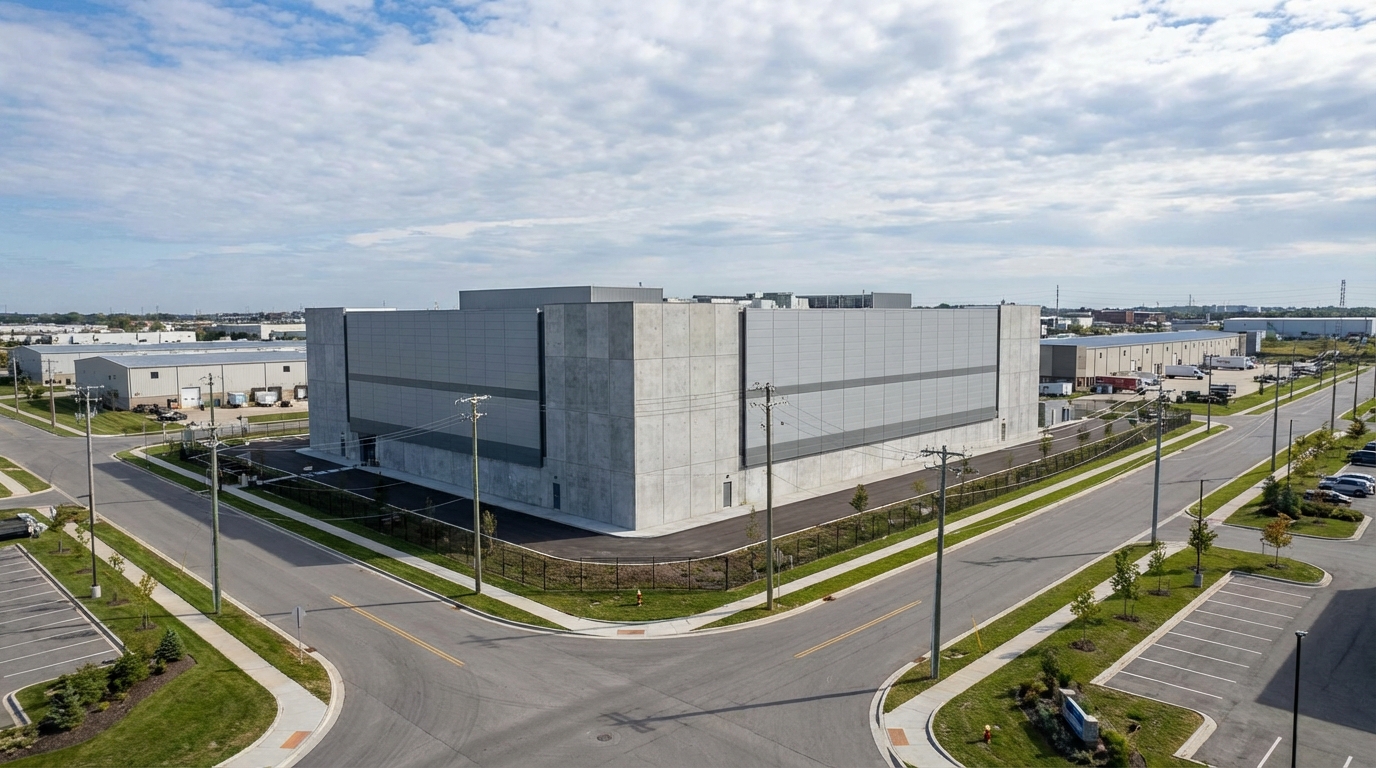
Introduction: Why Insurance is a Strategic Priority for Data Centers
Data centers are among the most capital-intensive assets in the modern economy. A single hyperscale facility can represent an investment of $500 million to over $1 billion, with mission-critical equipment densely concentrated under one roof. Whether you are a developer breaking ground on a greenfield campus, a colocation operator managing multi-tenant environments, or an enterprise building out private infrastructure, insurance is not merely a compliance checkbox. It is a strategic financial instrument that protects your investment, satisfies lender and investor requirements, and ensures business continuity when the unexpected occurs.
The insurance landscape for data centers is uniquely complex. Construction-phase risks differ significantly from operational risks, and the highly specialized nature of data center equipment, from uninterruptible power supplies and diesel generators to precision cooling systems and high-density server racks, demands coverage that goes far beyond a standard commercial property policy. Furthermore, the contractual obligations you carry with tenants, cloud customers, and interconnection partners create layers of liability exposure that require careful policy design.
This guide walks data center builders and operators through the essential types of insurance coverage, explains how to configure policies for both the construction and operational phases, and offers practical guidance for engaging with insurance providers and brokers who specialize in this sector.
Understanding the Risk Landscape
Before selecting insurance products, it is important to understand the categories of risk that data center projects face. These risks span the entire lifecycle: from site preparation and construction through commissioning, stabilization, and long-term operations.
During construction, the primary concerns include physical damage to the structure and installed equipment from fire, severe weather, theft, and accidental events. Delays caused by supply chain disruptions, labor shortages, or design errors can inflate project costs dramatically. Injuries to workers on-site introduce workers’ compensation and general liability exposure. Environmental hazards, including soil contamination or improper handling of fuel for backup generators, present additional risk vectors.
Once a facility is operational, the risk profile shifts. The concentration of high-value computing and networking equipment means that a single incident (a cooling system failure, an electrical arc flash, or a water intrusion event) can destroy millions of dollars in hardware within minutes. Downtime translates directly into revenue loss, contractual penalties, and reputational damage. Cybersecurity incidents, though typically addressed through specialized policies, can trigger physical consequences such as corrupted firmware in building management systems. Natural catastrophe exposure, particularly in regions prone to earthquakes, hurricanes, flooding, or wildfire, adds another layer of complexity that must be addressed at the policy level.
Insurance for the Construction Phase
Builders Risk Insurance
Builder’s risk insurance, also known as course of construction insurance, is the foundational policy for any data center build. It covers physical loss or damage to the structure, materials, and equipment during the construction period. For data centers, this policy must be carefully structured to account for the phased delivery and installation of high-value mechanical and electrical systems. Policies should be written on an all-risk basis, meaning they cover all perils unless specifically excluded.
Key configuration considerations include ensuring that the policy limit reflects the full completed value of the project, including soft costs such as architectural fees, permits, and financing charges. Coverage for equipment in transit and materials stored off-site is essential, given that generators, switchgear, and cooling units are often fabricated at remote locations and shipped to the project site over an extended timeline. Testing and commissioning coverage is another critical endorsement, since the period when electrical and mechanical systems are first energized carries elevated risk of equipment failure or fire.
It is also worth noting that builder’s risk policies for data centers should address the unique challenge of phased construction. Many large campuses are built in phases, with individual data halls or buildings reaching completion at different times. The policy must clearly define when coverage attaches to each phase and when it transitions to the operational property program. Ambiguity in phasing provisions can result in coverage disputes if a loss occurs in a partially completed section of the facility while other sections are already operational and generating revenue.
Exclusions are another area requiring careful negotiation. Standard builder’s risk forms may exclude damage caused by faulty design, defective materials, or poor workmanship. While the defective component itself is typically not covered, the resulting damage to other property should be.
Delay in Start-Up (DSU) / Advance Loss of Profits
A delay in start-up policy covers the financial consequences of a construction delay caused by an insured peril. For a data center project, a six-month delay in achieving commercial operation can mean tens of millions of dollars in lost revenue, continued financing costs, and penalties under pre-signed lease agreements with tenants. DSU coverage bridges this gap by compensating for the projected income that would have been earned during the delay period.
When configuring this coverage, it is critical to work with your broker and underwriter to develop a realistic revenue projection and to set the indemnity period at a length that accounts for the lead times on critical replacement equipment. Generator lead times alone can extend 40 to 60 weeks in the current market, so an indemnity period of 18 to 24 months is not uncommon for large data center projects.
General Liability and Umbrella Coverage
Commercial general liability insurance protects against third-party bodily injury and property damage claims arising from the construction site. Data center construction sites present unique hazards, including heavy electrical work, confined space operations, crane lifts of rooftop units, and the handling of diesel fuel and battery electrolyte. A CGL policy should carry limits appropriate to the project value, typically starting at $1 million per occurrence and $2 million aggregate, with an umbrella or excess liability policy providing additional limits of $10 million to $100 million depending on the project’s scale and the requirements of lenders and investors.
Professional Liability (Errors and Omissions)
Design errors in data center projects can have cascading consequences. An undersized electrical bus, an improperly specified chilled water loop, or a miscalculated structural load can result in costly rework, delays, and even facility underperformance after completion. Professional liability insurance, typically carried by the design and engineering firms, protects against claims arising from negligent design or specification. As an owner, you should require minimum professional liability limits from your design team and verify that policies remain in force through the project’s statute of repose.
Contractor’s Pollution Liability
Data center construction frequently involves fuel storage for backup generators, battery systems with hazardous electrolytes, and site work that may encounter pre-existing soil or groundwater contamination. Contractor’s pollution liability insurance covers cleanup costs, third-party claims, and regulatory defense expenses arising from pollution events during construction. This coverage is particularly important when building on brownfield sites or in jurisdictions with stringent environmental regulations.
Insurance for Operational Data Centers
Once a data center transitions from construction to operations, the insurance program must evolve to address a fundamentally different risk profile centered on asset protection, revenue continuity, and third-party obligations.
Special Form Property Insurance
Property insurance is the cornerstone of the operational insurance program. A special form property policy provides coverage for physical loss or damage to the building, mechanical and electrical infrastructure, and, depending on the policy structure, tenant or customer equipment housed within the facility. Valuation methodology is critical. Data centers should be insured on a replacement cost basis, reflecting the true cost to rebuild and re-equip the facility at current market prices rather than depreciated book value.
Particular attention should be paid to sublimits and exclusions. Many standard property policies impose sublimits on equipment breakdown, water damage, or outdoor property such as fuel tanks and transformer yards. These sublimits may be wholly inadequate for data center exposures. Work with your broker to negotiate sublimits that align with your actual exposure, and ensure that the policy includes coverage for debris removal, expediting expenses, and code upgrade costs that may be triggered when rebuilding to current standards.
Another important consideration is the treatment of tenant or customer equipment. In colocation environments, the operator’s property policy may or may not extend to cover equipment owned by tenants and installed within the facility. Some operators carry coverage for tenant equipment as a customer service and competitive differentiator, while others require tenants to carry their own property insurance with the operator named as an additional insured. The approach you choose will affect policy structure, premium cost, and the allocation of risk between parties. Regardless of the approach, lease agreements should clearly delineate responsibility for insuring tenant equipment and define the waiver of subrogation provisions that prevent carriers from pursuing recovery actions between the operator and its tenants.
Equipment Breakdown (Boiler and Machinery) Insurance
Equipment breakdown insurance covers loss resulting from the sudden and accidental failure of mechanical and electrical equipment. For data centers, this includes generators, UPS systems, power distribution units, switchgear, transformers, chillers, computer room air handlers, and fire suppression systems. This coverage fills a gap that standard property policies often exclude or sublimit. A catastrophic failure of a main switchgear assembly or a transformer explosion can cause damage running into the tens of millions of dollars, making adequate equipment breakdown limits essential.
Many equipment breakdown policies also provide access to inspection and loss prevention engineering services. These services can help identify potential failures before they result in catastrophic loss, adding risk management value beyond the indemnification itself.
Business Interruption and Extra Expense Insurance
Business interruption insurance compensates for lost revenue and continuing fixed expenses when an insured peril forces a data center to reduce or cease operations. For colocation and hosting operators, lost revenue may include monthly recurring charges from tenant leases, interconnection fees, and managed services income. For enterprise operators, the measure of loss may be the cost of maintaining operations at an alternate site plus the value of lost productivity.
Extra expense coverage pays for the additional costs incurred to maintain operations during a covered event, such as renting temporary generator capacity, deploying mobile cooling units, or migrating workloads to a disaster recovery site. Given the criticality of uptime in the data center business, extra expense coverage is often as important as the business interruption component itself.
Configuring business interruption coverage requires a thorough analysis of the facility’s revenue streams, the interdependencies between mechanical systems, and the realistic timeline for repair or replacement. The waiting period, which is the deductible equivalent in business interruption policies, should be calibrated to the facility’s redundancy level. An N+1 facility may tolerate a longer waiting period than a facility with limited redundancy. The indemnity period should extend long enough to cover the worst-case repair scenario, including lead times for custom-manufactured equipment.
Cyber Liability Insurance
While data center operators may not host the data itself in a legal or contractual sense, they are nonetheless exposed to cyber risk. Building management systems, DCIM platforms, access control systems, and network-connected power and cooling infrastructure are all potential attack surfaces. A cyber liability policy covers first-party costs such as forensic investigation, notification expenses, and system restoration, as well as third-party claims alleging failure to protect data or maintain agreed-upon security standards.
For colocation operators, the intersection between physical security and cybersecurity creates unique coverage questions. If a cyber attack compromises a building management system and causes a cooling failure that damages tenant equipment, the loss may implicate both property and cyber policies. Understanding how your policies coordinate, and where gaps exist, is essential.
Environmental Liability Insurance
Operational data centers may maintain significant quantities of diesel fuel, battery electrolyte, and refrigerants. A fuel spill from a generator day tank, a battery room leak, or a refrigerant release can trigger cleanup obligations and regulatory action. Environmental liability insurance covers these costs and provides defense against third-party claims. Facilities located near sensitive receptors such as waterways, wetlands, or residential areas may consider carrying higher limits.
Directors and Officers (D&O) Liability
For data center companies with investors, board members, or publicly traded equity, directors and officers liability insurance protects leadership against claims alleging mismanagement, breach of fiduciary duty, or failure of oversight. In an industry where a single facility outage can wipe out a quarter’s earnings, D&O exposure is material and should be funded at appropriate limits.
Configuring Your Insurance Program: Practical Guidance
Work with Specialized Brokers
Data center insurance is a niche discipline. Not every commercial insurance broker has the technical fluency to properly assess data center risks, negotiate appropriate terms, and place coverage with carriers experienced in this asset class. Seek out brokers who have a dedicated technology or data center practice, can demonstrate a track record of placing programs for comparable facilities, and have relationships with the excess and surplus lines marketplace, and domestic specialty insurers who actively underwrite data center risks.
Conduct Thorough Valuations
Underinsurance is one of the most common and costly mistakes in data center insurance. Facility values can change rapidly as equipment is upgraded, power capacity is expanded, or market pricing for replacement components shifts. Commission an independent appraisal of your facility’s replacement cost at least every two to three years, and update insured values annually based on capital expenditure activity. Include all soft costs, site improvements, and below-grade infrastructure in the valuation.
Align Coverage with Contractual Obligations
Lease agreements, interconnection contracts, and service level agreements often contain specific insurance requirements, including minimum coverage types, limits, and additional insured endorsements. Review your tenant and customer contracts carefully to ensure that your insurance program satisfies all contractual obligations. Failure to maintain required coverage can constitute a default under lease terms and may limit your ability to recover costs from third parties in the event of a loss.
Coordinate Construction and Operational Policies
The transition from construction-phase insurance to operational coverage is a critical juncture. Builder’s risk policies typically expire at substantial completion or first occupancy, and any gap between the expiration of the construction policy and the inception of the operational property policy can leave the facility uninsured during a vulnerable period. Work with your broker to ensure seamless transition, and consider overlap provisions that allow both policies to respond during the commissioning and stabilization period.
Leverage Loss Engineering and Risk Mitigation
Insurance carriers evaluate data center risks based on construction quality, fire protection systems, electrical redundancy, site exposure, and operational protocols. Investing in loss prevention measures, such as very early smoke detection, pre-action fire suppression, robust fuel containment systems, and comprehensive maintenance programs, can materially reduce premium costs and improve policy terms. Many carriers offer loss engineering assessments at no additional cost, and the recommendations from these assessments can guide capital investment decisions that pay dividends in both risk reduction and insurance savings.
Plan for Catastrophic and Aggregated Losses
Operators with multiple facilities should consider how their insurance program responds to a catastrophic event that affects more than one site simultaneously, such as a regional earthquake or a widespread grid failure. Portfolio-level coverage, shared limits, and captive insurance structures are tools that larger operators can use to manage aggregated exposure efficiently. Understanding the interplay between per-occurrence limits, aggregate limits, and deductible structures is essential to ensuring that the program can respond to both single-site incidents and portfolio-wide events.
Conclusion: Building Resilience Through Strategic Insurance
Insurance is a foundational element of data center risk management, not an afterthought. A well-designed insurance program protects your capital investment, satisfies the requirements of lenders and equity partners, fulfills contractual obligations to tenants and customers, and provides the financial resilience to recover from adverse events without existential impact to the business.
The key to an effective program is specialization. Work with brokers and carriers who understand the unique characteristics of data center construction and operations. Invest the time and resources to properly value your assets, align coverage with your contractual and regulatory obligations, and continuously update your program as your portfolio grows and the risk landscape evolves. By treating insurance as a strategic discipline rather than a procurement exercise, data center builders and operators can ensure that their facilities, and the critical digital infrastructure they support, remain protected against the full spectrum of risks they face.